
Managed Reality
By W. F. Twyman, Jr.

“In those days, Howard was a place where all ideas were permitted a hearing, subjected to critical analysis, and accepted or rejected on the basis of evidence.” — Amos Jones quoting Tribute of Louis Clayton Jones to Howard University President Mordecai Wyatt Johnson
For the past two weeks, I managed reality. My asthma flared up worst each day then the day before. Asthma is a family curse. I have asthma as do my children, my Dad, a first cousin and who knows whom else in the family tree. Could our family founder, Daniel Brown (1833 - 1885), have had asthma too? Daniel died from pneumonia but we may never know whether the underlying condition was asthma or not. Do you know why Theodore Roosevelt is my favorite U.S. President? Because the young Theodore struggled to breathe as a youngster like I did. I would watch my Dad in the dining room struggling to breathe, his shirt and chest covered in sweat as he wheezed and his lungs fought back the inflammation. I remember my Dad in the emergency room, touch and go. I remember my small-airway capacity down to 3 percent. At 0 percent, one dies. I remember those times.
For the last several days, I pretended I could manage reality with a hit from my albuterol inhaler. Each inhalation offered a burst of immediate relief and I ran with it. I had changed my reality until my lungs began to constrict again — first 8 hours later, then 6 hours later, then 4 hours later. And each time, my breathing was more labored than the previous inhalation from the inhaler. This morning I woke up and reality woke me up. My allegorist had scared me straight twenty years ago with images of hospitalization and placement on a ventilator. I remembered New Orleans Mayor Ernest Morial died of severe asthma on Christmas Eve. I googled over use of an inhaler and how over use weakened the lungs in the long run…hospitalization….death.
I stopped managing reality and accepted reality despite my busy schedule and pride. I did not want to go out with my lungs at 0 percent capacity on a ventilator. I am better now.
=========
As citizens in this great land, we manage reality about race. We do it all the time. And eventually, our brains will tell us to accept reality. Every man knows reality when he is at his lowest place.
Writer J. Anthony Lukas wrote about race and school busing in Common Ground: A Turbulent Decade in the Lives of Three American Families (1985). A great book but I suspect Lukas was troubled by the gap between his impression of Boston and the reality of race in Boston. Lukas must have been painfully aware that the public housing Twymon family bordered on the caricature. By 1985, blacks were part of the Harvard community and had been since Judge George Lewis Ruffin’s graduation from the law school in 1869. There is a long, long stretch of time between 1869 and 1985. Blacks at Harvard Lukas must have been aware that use of the Twymon family as a place holder for black people was merely one part of the Black experience.
Nuance and complexity may have escaped his readers.
Lukas chose a white Harvard family, the Divers, as a stand in for white Boston. A part of me wanted to see the black race story through the eyes of former U.S. Senator Edward W. Brooke III, my college friend Janet Brown who grew up in the suburb of Lexington, Massachusetts (1.5% black for my race conscious readers), attorney Flash Wiley, President of the Boston Foundation Anna Faith Johnson Jones (daughter of Howard University President Mordecai Johnson), and Bertram M. Lee, Sr., first black part owner along with Peter Bynoe (see below) of the Denver Nuggets. By choosing a working-class black family living in a public housing apartment devastated by race riots in 1968, Lukas was managing reality for the reader.
The Twymon family was part of the race story but they were not equals with the Divers family and that would be my problem. One must compare likes with likes, otherwise one is pretending upper-class stands in for white in Boston and public housing stands in for black in Boston. There is more to the story of race and class and public school busing in Boston.
The first black family I ever met in Boston was Victor Bynoe and his wife. When my grandfather lost his Beautiful Mind and passed away on February 20, 1936, my Grandma faced a nightmarish choice. How would she raise her seven children, including my 18-month-old Dad, in a manner her children deserved? Grandma made the decision to send her children to live with relatives throughout Virginia, Connecticut and Massachusetts where her kids would have greater opportunity. Grandma took the long view.
My Uncles Robert Daniel and James Scott were shipped off to Boston to live with Victor Bynoe, an attorney native to Barbados. There was a family tie to Mrs. Bynoe which escapes me at the time. Victor Bynoe was a tremendous influence on my two uncles. He owned a hotel, practiced law and was influential in local politics. He knew the future Senator Edward Brooke. My uncles learned the aim of a good life was enterprise and property. One day, Victor’s children would become entrepreneurs as well. One son owned a liquor store. The other son, Peter, graduated from Boston Latin, Harvard College, Harvard Law School, and the Harvard Business School. He moved out to Chicago and made his way as a partner in a Big Deal law firm, real estate investment and the first black part-owner of a NBA professional basketball team (Denver Nuggets). Today, Peter is a millionaire as should be expected.
Did Lukas as a writer know that families like the Bynoe family existed in Boston during the 1960s and 1970s in Boston? Wouldn’t the Bynoes have been a better non-conforming frame for race as a fair comparison to the Diver Harvard family? Lukas was managing reality in Common Ground.
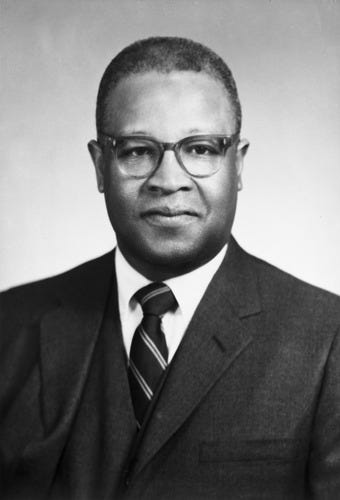
Victor Bynoe, Attorney and Hotel Owner
=========
Speaking of Harvard and managing reality, the award for managing reality today goes to Harvard for their suggested summer reading list. One can make life all about race. Sure, one can. And one will lose many people in the process. Case in point — this summer’s suggested reading list from Harvard University. Are students led in the direction of the greatest minds like Leo Tolstoy, Boris Pasternak, F. Scott Fitzgerald, Marcus Aurelius, and Ernest Hemmingway?
No, young students, our best and brightest they say, are led in the direction of even greater minds. Minds such as Bettina Love who would abolish the police, Torrey Peters who would center focus on “Detransition, Baby,” Sara Ahmed who would turn our attention “to surviving the shattering experiences of facing the walls of racism and sexism.” My breath is taken away. Thank the Lord for prednisone/smile. The Amazing Minds of Our Times
Not to be outdone by these Olympian minds of our times, the Harvard Divinity School does the University one better with the blessings of Reconsidering Reparations by Olufemi O. Taiwo and The Trayvon Generation by Elizabeth Alexander on its suggested reading list. How about The Rude and Entitled Generation, Ms. Alexander? Yesterday, a delusional homeless man screamed at me for a minute because I did not have the time to hear his pitch for money. There was a time when black adult men felt shame for shameful acts in public. I wonder what Harvard Divinity School student Mordecai Wyatt Johnson would have suggested as a summer reading list for his classmates in the year 1923?
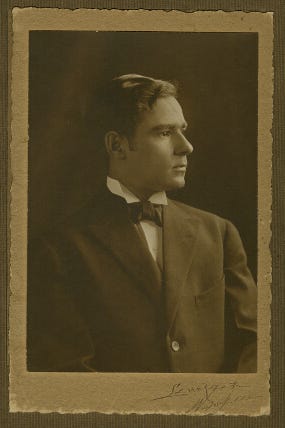
The Young Mordecai Wyatt Johnson
An unserious listing of unserious books. That’s all I can say as Harvard masterfully manages reality for incoming students.
=========
What is the difference between dogma and conviction? This is a question Chris Williamson put to Eric Weinstein on a recent podcast. Managed Reality and Other Non-Conforming Thoughts Like Howard University President Johnson, Weinstein received his doctorate from Harvard. Weinstein did not answer dead on the question but I will. Dogma implies force of compliance upon the non-conformer. A man of conviction is indifferent to whether the listener agrees, disagrees or is neutral on said position.
To paraphrase Weinstein, those who play dogma are casting a spell upon non-conformers. The spell is cast in how issues are framed and how recommended books are chosen. Why not recommend a book on the incredible life story of Mordecai Johnson as opposed to the activist frame of reparations for American slavery? Why manipulate young readers in the direction of grievance and resentment as opposed to joy and enterprise in black life? See any issue of Black Enterprise Magazine in the 1970s. See any autobiography of Booker T. Washington. See any biography of Rev. Lemuel Haynes. See any biography of Reginald Lewis. See any biography of Mordecai Wyatt Johnson. Etc. etc.
When we do not present the full and complete story of Black Americans, we are distorting history for readers. The consequence will be a dumb population ignorant of the great and epic in our past. In lieu of gratitude, readers will see the past as a house of mirrors, out of proportion to reality. Gone are Middle-American stories of lives of high aim in suburban, middle-America. In their place, the young will be trained to know only of Tulsa race riots, redlining, the (unserious) effects of American slavery today, and Jim Crow (long gone).
Conclusion: I do not do dogma in my writing. I do not use slogan words. I have no desire to forget enterprise and remember sad sack stories. One day, a younger generation born in the 2030s and 2040s will rediscover the things I knew — founding fathers from the 1870s, enduring black institutions like the AME church and black banks and black law firms and Howard University and pioneer black lawyers. And the beautiful ones not yet born will feel robbed of their real, authentic history.
I write my examined life so that the beautiful ones not yet born will know there were always black families around with…Beautiful Non-Conforming Minds.
The Greatest of All Time Howard University President Mordecai Johnson (1890-1976)
See 1:22:00 to 1:29:48
I’m sorry to read about your asthma. It doesn’t run in my family, and I had no idea it was so devastating. You’re a good man, Mr. Twyman. Please take care of yourself so you can keep sending us your wonderful messages.