
What Is Diversity?
By W. F. Twyman, Jr.

“Mom and you were made for each other.” — my daughter while browsing at a Brooklyn bookstore
While standing on a Manhattan subway platform, a friend remarked that she loved the diversity in New York City. I asked why? She replied, well, there were only Mexicans and Whites in her town. Here, there were Asians and black people too. And my mind does what it always does. I thought about what I had seen in New York City over the past several days. Did my observations bear out my friend’s perception of heart affirming diversity?
The moment I set foot in LaGuardia Airport, I encountered all manner of people from all parts of the world. There were black people but that told me little about the person. Were they from the Islands? From Sub-Saharan Africa? From the American South? There was no way to know upon first sight and I loved that nuance and complexity to blackness. I came across Indians and Asians and people who refused to be labeled upon sight. Once again, I felt like I was engaging the larger world.
I love that feeling.
When I checked into my Brooklyn hotel, there was a nosey Latina front desk clerk to greet me. She asked detailed questions about my visit. Her accent didn’t reveal her place of origin. Was she from the Bronx? Spanish Harlem? The Dominican Republic? San Antonio? Los Angeles? I could not tell. For me, diversity means labels are ill-fitting.
I took an uber to explore the nightlife. The driver was a nice immigrant from Bangladesh who had lived in New York for over twenty years. He was very patient with me as I forgot my cell phone in my room. We bonded over forgetfulness, the uber driver having lost his passport recently.
As I explored Manhattan, I was caught up in the wide expanse of humanity on city streets. There were young Latinas posing for graduation pictures at Washington Square Park, black radical men at Union Square preaching the faith of protest and activism, young Italian men wearing gold chains around their neck as my Brooklyn father-in-law once did, affluent white elderly couples on tree lined quiet streets, a Mexican biochemical graduate of New York University in his commencement finest, and the enterprising taxi cab driver from a small town in northern India.
There was the black staff at the Empire State Building at night. I swear they were nearly all black but who knows if they were native to America or not. A young Latina played New York by Jay-Z on the platform observatory. The city lights were dazzling. What I found interesting was the ebb and flow of diversity in Manhattan. I mean I was served by a Spanish speaking waiter at the Knickerbocker Restaurant in Greenwich Village and a Spanish speaking waiter at Tavern on the Green on Central Park West. Most of the customers were comfortable and white but there were black customers too.
I saw black people on the oil portraits at the Harvard Club of New York and in service roles around the club. The members and guests were WASP and Jewish, with a delightful and friendly Asian American family who took my picture underneath the opulent ceiling of the Main Dining Room. The waiters were Indian. As I waited to enter the Club, an Indian American couple walked by. The gentleman excitedly repeated “She is the youngest member of Harvard Club! She is the youngest member of Harvard Club!” The point was made.
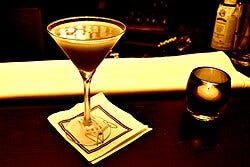
After dinner at the Club, I walked down West 44th Street and stopped by the Algonquin Hotel. The Algonquin is well-known as a watering hole for writers in the early 1900s. The likes of Dorothy Parker and Harold Ross have savored times at the Algonguin. The bartender seemed Indian but I could not be sure. And why should it matter, really? Everyone was white and comfortable.
I was comfortable.
*
Brooklyn is a different world. My friend did not experience Brooklyn, so I thought about the rest of the diversity story in New York City.
On Mother’s Day, my daughter and I headed over to Junior’s Cheesecake in downtown Brooklyn. My wife loves Junior’s more than nearly every other restaurant from her childhood. What better place than Junior’s to spend Mother’s Day? My daughter and I had a great Daddy Daughter talk about life and creative expression. It was really a treasure to be close to one’s young adult child. Many are not so fortunate. We talked about Mom and her older brothers and my fixation on a certain Yalie from Germany (smile). My daughter poured out her love for Brooklyn. Everyone was hip, even the grandparents with their hair colors. The Brooklyn vibe was just right.
The crowd and staff were mixed in nature which seemed right as rain.
As we walked along the street to a bookstore, I shared family history with my daughter which is what Dads do on Mother’s Day. I related how her greatgreat granddad had been Clerk of the Court in Brooklyn. No one knew he was black until years later but, by then, he was part of the judicial family and no one cared. This story of passing occurred in the 1920s-1940s. My daughter filed away the story as another part of her Brooklyn heritage. I talked about my daughter’s Great-Great Uncle who had been number 1 in his law school class at Brooklyn Law School class. He was the first black appellate state judge in New York. So, her roots are not just Brooklyn Moms but Brooklyn Men too.
At the bookstore, we indulged in our mutual love for books. I came across James by Percival Everett. My daughter laughed at the Christmas memory, how Mom and I had both gifted James to one another. “Mom and you were made for each other.”
Our aim was Allan’s Bakery off of Flatbush Avenue for Mom. I remembered this bakery. I had been here before when I was young and dating my wife. As opposed to my earlier experiences in Manhattan and Booklyn, everyone was black. The place was extremely popular. The line doubled around upon itself in the small waiting area. The waiting customers, the counter staff, and the bakers were all black. They all seemed dark-skinned in complexion with the flags of Jamaica displayed prominently. “We are a third generation family-owned and operated Caribbean bakery that has been serving the Brooklyn, New York area for over 60 years.”
https://www.allansbakery.com/ https://blog.doordash.com/en-us/post/allans-bakery-in-brooklyn
It was a different experience from the Knickerbocker in the Village, Tavern on the Green on Central Park West, and the Harvard Club of New York. No Indians, Latinas, Asians, or Jewish patrons upon first sight.
We walked three blocks towards Maple Street and I found myself in a different world once again. This time, the vibe was more integrated and established, 50/50 black and white and a decided middle-class/ upper-middle class vibe. We walked past my wife’s childhood home and stumbled upon a mansion at the corner. My daughter exclaimed it was the largest mansion she had ever seen in Brooklyn. Come to find it was the home of a wealthy minister back in the day. “Was he black?” my daughter asked. “Yes,” my wife replied over the phone. She was childhood friends with the minister’s daughter.
I had this nascent sensation that different worlds were co-existing side by side.
As I boarded the city bus driven by a black bus driver, that feeling intensified. The passengers on the bus were all young or middle-aged and white, perhaps immigrant but who can say. What really caught my attention was how I left the all-black Caribbean world of Allan’s Bakery and, within moments, found myself in a different world—an Orthodox Jewish neighborhood where all the men wore black hats, black beards and single strands of curly hair framing their face. The black jackets, the black pants and white shirts seemed almost like a required uniform. The women all appeared in tradition apparel, unlike what I saw in Manhattan and downtown Brooklyn.
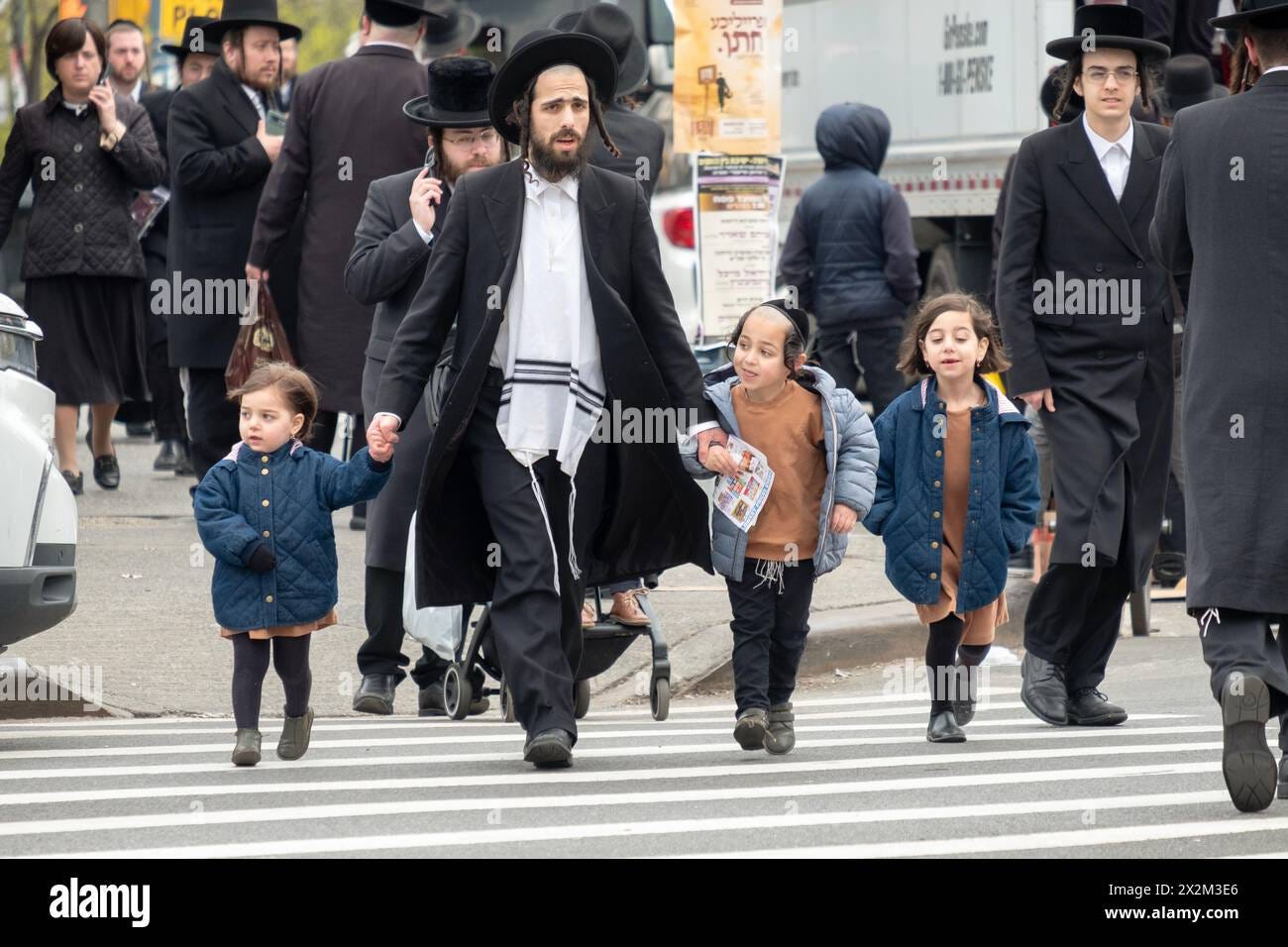
I saw no black people on the streets. Nor did I see any Asians, Indians or Latinas. Just one type of people which was a mirror image of the monotone world at Allan’s Bakery. Two monocultures, blocks apart. And as I digested the images, I wondered whether my friend’s celebration of diversity was part of the New York City story, not the whole story.
Conclusion: What do we mean by diversity? It is such an important question that does not lend itself to an easy answer. Yes, there was an amazing diversity of mankind at LaGuardia airport. The men who drove me around Brooklyn and Manhattan were from the opposite side of the world. As I strolled through Union Square, Washington Square Park and Times Square, I was immersed in sensual humanity from all places on the color spectrum. The subway experience, from the 2 and 3 express train to the L train, revealed unpredictable shades of the human condition always. I remember the young black mother, maybe Ethiopian or Sudanese, teaching her young son his letters on the train. I took in the young Italian guys too cool for school with their gold hanging around their neck. There were the young white couples, the older black men with graying hair, and Latinas everywhere.
This is the humanity my friend witnessed.
And yet I also felt the Knickerbocher vibe of a comfortable steakhouse as I forgot race. I forgot diversity at Tavern on the Green. The Upper West Side was diverse and I felt aligned with the city streets. Isn’t it strange how I felt at home in the uber WASP setting of the Harvard Club? Or the Algonquin Hotel? For me, diversity has been knowing and forgetting which dissolves into comfort in the larger world.
My daughter believes my wife, native to Brooklyn, and I were made for each other.
Brooklyn felt comfortable until I observed opposite worlds of race existing side-by-side. Do Orthodox Jews feel uncomfortable patronizing an all-black Caribbean bakery? Do Caribbean blacks feel uncomfortable strolling down Orthodox Jewish streets in Brooklyn? I only raise questions. I don’t have answers but I sense this dual existence is not the best in diversity. I think the best of diversity I found in Manhattan, although parts of Brooklyn have a great hip vibe.
At the Harvard Club, I was likely one of the few Black members or guests not in a service role. But I felt comfortable—the quiet elegance, the book-lined walls, the conversations about ideas. At Allan’s Bakery, I was surrounded by Caribbean Black people but felt slightly out of place—not unwelcome, just culturally different. My experience of Blackness is small-town, suburban Virginia, not Jamaica. My comfort zones are shaped by class and education as much as race. Perhaps that’s what my daughter meant about her mother and me being made for each other—we both enjoy and live in multiple worlds, belonging fully to none and partially to many.
What do you think?
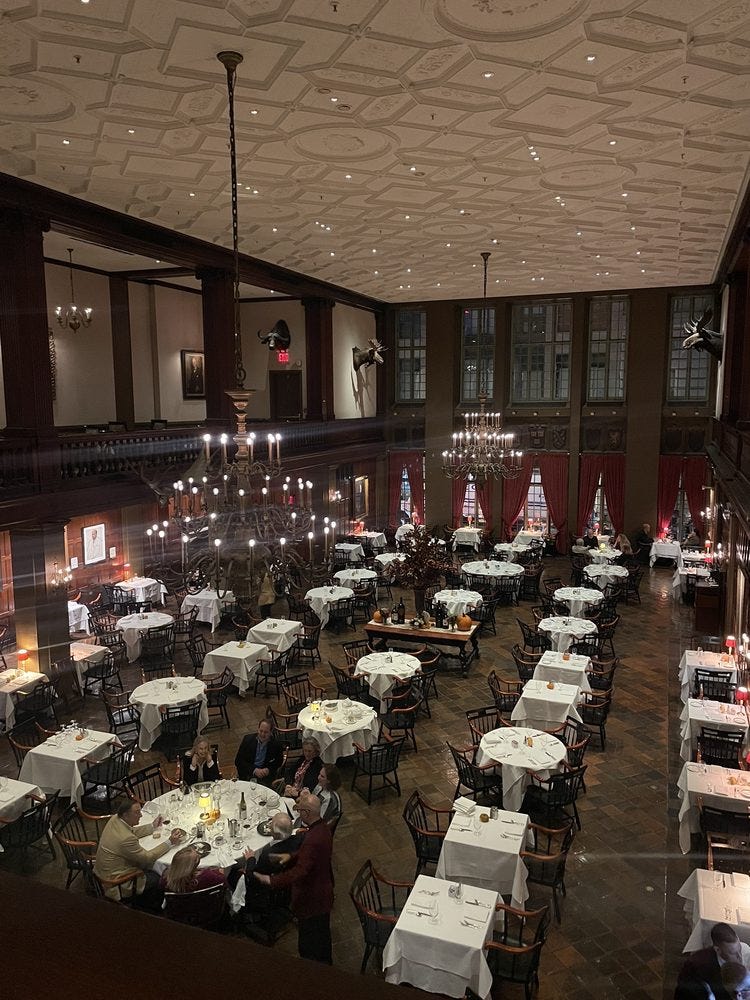
Harvard Club of New York
Great post. Love your writing. I see a book’s worth of material in a single post. Has America achieved its founding vision of equality under the law, as much as human nature can perhaps allow? What are the types of diversity that are most beneficial and where? New York is the perfect case study for all of these questions.
"For me, diversity has been knowing and forgetting which dissolves into comfort in the larger world." I liked that quote so much that I re-stacked it. In a truly diverse society, we feel comfortable walking into a neighborhood dominated by a culture other than our own. If they all have a different skin color or wear clothing we find startling, we note and dismiss that and recognize the personhood of each.